- Tel:+8616638907067
- Email:[email protected]
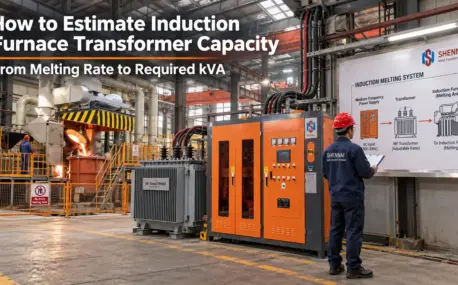
Induction furnace transformer capacity should be estimated from molten-metal output, specific energy demand, system losses, power factor, and simultaneous loads. Furnace tonnage alone is insufficient. Convert the production target to kilograms per hour, estimate useful process power, correct for losses, convert real input kW to kVA, and verify the electrical design with the equipment supplier excerpt …
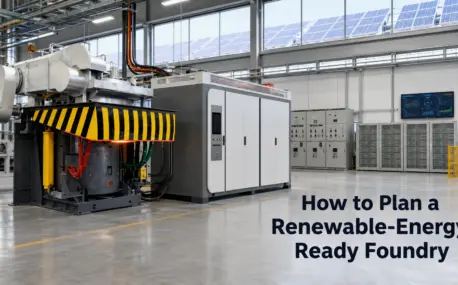
A renewable-energy-ready foundry is not simply a plant with solar panels or a battery beside the transformer. It is a melting operation designed so that furnace duty, electrical infrastructure, cooling, controls, and future energy assets can work together without limiting production. For a new plant or expansion project, renewable energy foundry planning should begin with excerpt …
A constant power output induction furnace is valuable because the electrical load does not remain unchanged throughout a heat. Cold scrap, charge collapse, molten-bath formation, refractory condition, and temperature adjustment all change how effectively the furnace coil transfers energy to the metal. The rated kilowatts on a power-supply nameplate therefore do not tell the whole excerpt …
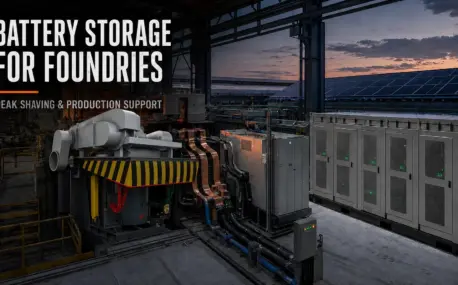
Battery energy storage for foundries can reduce short, recurring demand peaks, shift electricity use between tariff periods, absorb surplus photovoltaic generation, and support selected loads during brief power disturbances. However, a battery energy storage system, or BESS, cannot be sized from furnace tonnage or nameplate power alone. The engineering decision depends on the actual load excerpt …
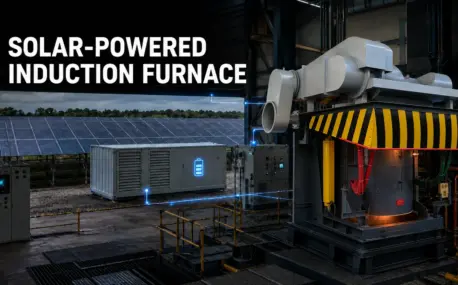
A solar powered induction furnace is technically feasible, but an industrial furnace usually cannot operate reliably from photovoltaic panels alone. Induction melting creates a high, variable electrical load, while solar output changes with the time of day, weather, season, and array conditions. The gap must be covered by battery storage, the utility grid, another dispatchable excerpt …
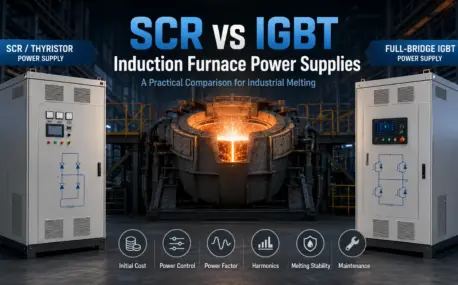
There is no universal winner in an SCR vs IGBT induction furnace comparison. IGBT is often worth closer evaluation when a foundry needs responsive power regulation, stable output as the furnace load changes, flexible part-load operation, and modular fault management. SCR can remain a practical option for large-capacity or higher-voltage systems, plants with mature thyristor excerpt …

Please send us your request and we will reply to you within 24 hours.
We will get in touch with you as soon as possible
