- Tel:+8616638907067
- Email:[email protected]
For a foundry that melts gray iron, ductile iron, return scrap, or mixed charge materials every day, a steel shell induction furnace for cast iron melting is not only a heating machine. It is part of the whole production rhythm. Buyers usually compare melting speed, batch capacity, power supply stability, furnace body strength, lining life, pouring excerpt …
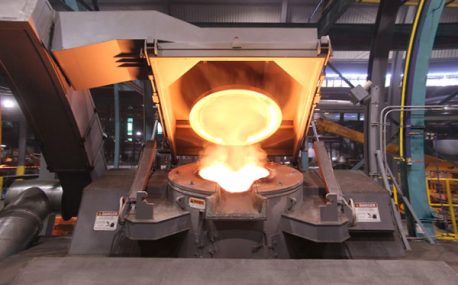
For a foundry that melts gray iron, ductile iron, return scrap, or mixed charge materials every day, a steel shell induction furnace for cast iron melting is not only a heating machine. It is part of the whole production rhythm. Buyers usually compare melting speed, batch capacity, power supply stability, furnace body strength, lining life, pouring safety, cooling reliability, and long-term service cost before placing an order. In cast iron production, the right furnace helps keep molten metal consistent, supports repeated heats, and makes daily pouring work more predictable.
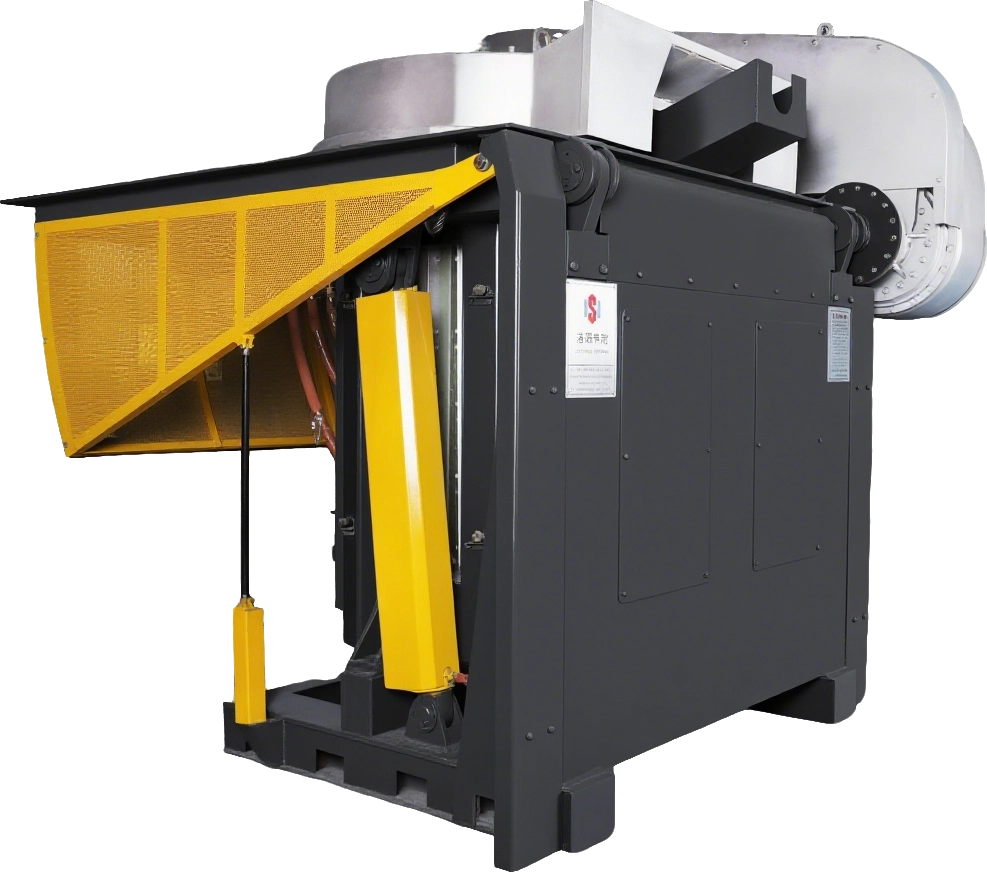
Cast iron melting requires steady heat, controlled chemistry, and enough stirring to reduce uneven composition in the molten bath. A cast iron induction furnace uses electromagnetic induction to heat the metal charge directly. The medium frequency power supply sends current to the induction coil, the coil creates a changing magnetic field, and eddy current heating generates heat inside the metal itself.
This process is well suited for cast iron foundries because it does not depend on direct flame contact. The workshop stays cleaner than many traditional melting methods, and the operator can control power input more easily during charging, holding, slagging, and tapping. For gray iron melting furnace and ductile iron melting furnace applications, stable temperature control helps reduce pouring defects caused by overheated or underheated metal.
In many production lines, the charge may include pig iron, steel scrap, foundry returns, risers, gates, and alloy additions. A medium frequency induction furnace can handle this kind of practical foundry work when the capacity, power rating, refractory lining, and cooling system are selected correctly.
A steel shell induction melting furnace is built with a rigid steel furnace body. This matters in cast iron melting because the furnace is exposed to heavy charging impact, high thermal load, repeated tilting, lining maintenance, and long operating hours. A weak furnace body may save cost at the beginning, but it can increase vibration, lining wear, and repair time later.
SHENNAI provides steel shell induction melting furnaces for metal casting plants, rolling mills, foundries, metallurgy workshops, machinery manufacturing, scrap metal recycling, and laboratory melting applications. To meet different production capacities, the cage-type steel shell furnace is available from 1T to 90T, while the standard hydraulic steel shell furnace covers 250kg to 60T. For small-capacity melting projects, the reducer-type steel shell furnace can be customized up to 750kg, making it a practical choice for compact cast iron melting lines.
For buyers comparing a cast iron melting furnace, these ranges are useful because not every plant needs the same configuration. A workshop making small machinery parts may need a compact furnace with simple operation. A larger cast iron foundry may need a stronger steel shell furnace body, hydraulic tilting induction furnace structure, automatic monitoring, and enough cooling capacity for long shifts.
Cast iron melt quality depends heavily on temperature stability before pouring. If the molten iron is too cold, misruns and poor filling may occur. If it is too hot, energy cost rises and lining wear may become faster. A steel shell induction furnace paired with a suitable medium frequency power supply gives operators better control over melting time, holding temperature, and final tapping temperature.
SHENNAI steel melting furnace information commonly references 40–60 minutes melting time, although the actual cast iron melting time depends on furnace capacity, power configuration, charge density, metal type, lining condition, and operator practice. In purchasing discussions, this range is a practical starting point for estimating heats per shift and daily output.
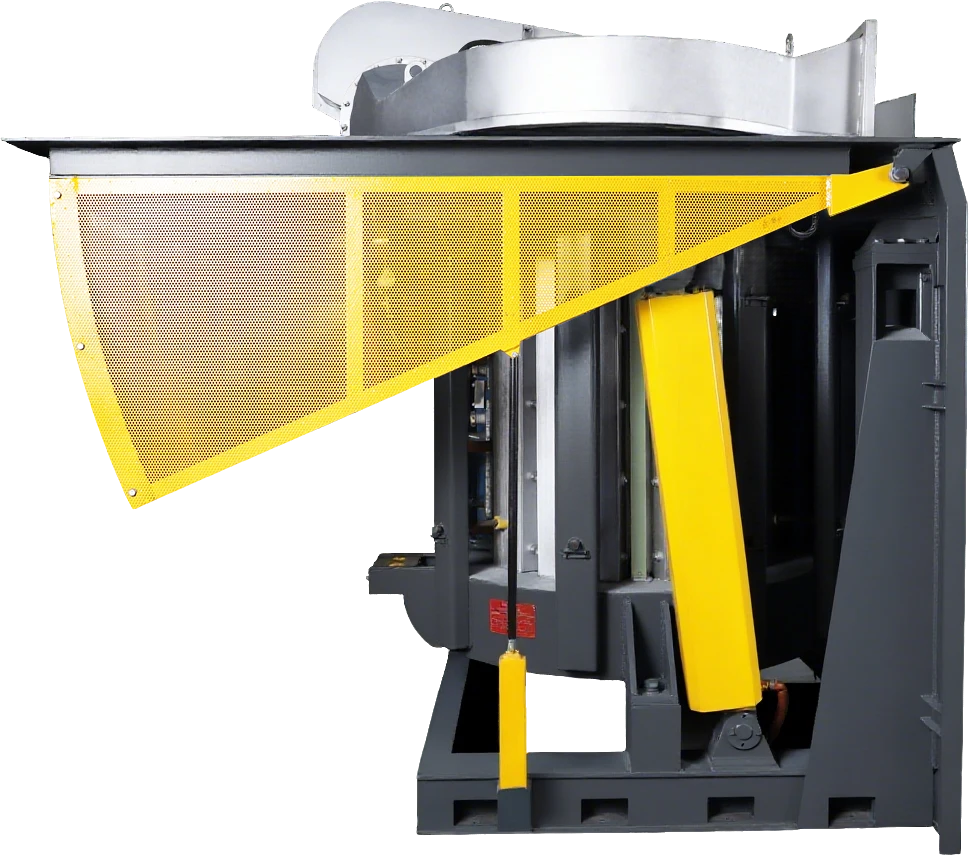
One of the most important steel shell furnace advantages is structural strength. Cast iron foundries often run with frequent charging, slag removal, sample checking, and tapping. The furnace body must support the induction coil, refractory lining, magnetic yoke, tilting frame, and molten metal load through many cycles.
SHENNAI steel shell furnace designs include a new flat-wound coil structure, integrated casting, profiled copper tubes with thickness up to 8mm at the thickest point, and a high-pressure insulated cyclone smoke board with 6mm to 8mm thickness. These details are not decorative. They help reduce vibration, protect the coil, and support stable operation in demanding foundry conditions.
For a large capacity cast iron melting furnace, magnetic efficiency has real operating value. The magnetic yoke made of silicon steel sheets helps shield magnetic field lines from the induction coil, reduce magnetic leakage, improve thermal efficiency, and increase output. Under suitable working conditions, this structure can help save 5% to 8% operating time.
For a foundry running several heats per day, reduced melting time can affect more than electricity cost. It can improve ladle scheduling, casting line continuity, labor planning, and furnace utilization.
Cast iron pouring requires controlled movement, especially when the furnace handles medium or large molten metal volumes. A hydraulic tilting induction furnace offers smoother pouring than simple manual or light mechanical tilting structures. SHENNAI steel shell furnace designs can use double hydraulic cylinders, with stable movement and adjustable operating speed.
For foundry teams, safe tilting is not a small detail. It affects operator confidence, pouring accuracy, ladle alignment, and the working environment around the furnace pit.
A steel shell furnace for cast iron is used in gray iron castings, ductile iron castings, machinery parts, pump and valve bodies, pipe fittings, counterweights, wear-resistant parts, rolls, and automotive-related cast components. It is also suitable for scrap iron melting furnace applications where recycled iron materials need to be remelted and adjusted before casting.
In machinery manufacturing, cast iron parts often require repeatable quality across many batches. In metal recycling, the furnace needs to handle mixed material input while still giving operators enough control over melt temperature and slag removal. In both cases, a foundry induction furnace with a strong steel shell structure provides better long-term value than a light-duty furnace selected only by initial price.
The first step is not asking for the lowest price. It is calculating batch weight, heats per shift, casting weight, pouring rhythm, metal loss, and future expansion. A furnace that is too small can limit production and force more frequent heats. A furnace that is too large may waste power and increase holding time if the casting line cannot consume the molten iron fast enough.
The induction furnace power supply should match the selected furnace capacity and expected melting cycle. Medium frequency power supply configuration affects melting speed, power factor, energy use, and process stability. For cast iron foundries with higher output targets, buyers should also consider whether one power supply can support flexible production, such as one furnace melting while another is prepared for pouring.
A continuous melting furnace needs reliable cooling. Coil temperature, water pressure, water quality, hose material, and cooling tower matching all affect service life. SHENNAI open-type steel shell melting furnace designs can include self-checking functions, real-time monitoring, leakage alarm, PLC control, carbon-free hoses, 304 stainless steel water distributors, and 304 stainless steel clamps. For plants running long shifts or 24-hour continuous operation, these details should be reviewed before ordering.
The choice between steel shell vs aluminum shell furnace depends on production scale and operating intensity. An aluminum shell induction furnace can suit smaller, lighter, and more budget-sensitive melting projects. It is easier to install and can be practical for low-frequency production.
For medium and large cast iron foundry work, a steel shell furnace is usually the better long-term option. It offers stronger furnace body support, safer hydraulic tilting, lower magnetic leakage, better durability, and better suitability for large capacity melting. If a plant melts cast iron every shift, the buying decision should be based on total operating cost, not only the purchase price.
A steel shell induction furnace is a practical choice for cast iron melting when a foundry needs stable temperature control, strong furnace structure, safer hydraulic tilting, lower magnetic leakage, and reliable continuous operation. The right furnace should be selected according to cast iron type, batch weight, daily output, melting time, power supply, cooling system, control functions, workshop layout, and future expansion plan. SHENNAI provides steel shell induction melting furnace solutions for foundry, metallurgy, machinery manufacturing, metal processing, recycling, and laboratory applications, helping buyers match furnace body, power supply, cooling system, and control package to real production conditions.
Q1: What type of induction furnace is best for cast iron melting?
A1: A steel shell induction furnace is often the better choice for medium and large cast iron melting because it provides stronger furnace body support, stable hydraulic tilting, lower magnetic leakage, and better durability for continuous foundry operation.
Q2: How long does it take to melt cast iron in an induction furnace?
A2: Cast iron melting time in an induction furnace is often estimated around 40–60 minutes per batch, but the actual time depends on furnace capacity, power rating, charge density, metal type, refractory lining condition, and operating practice.
Q3: Is a steel shell furnace better than an aluminum shell furnace for cast iron?
A3: For medium and large cast iron foundries, a steel shell furnace is usually better because it has a stronger structure, safer tilting performance, and better suitability for heavy-duty production. An aluminum shell furnace is more suitable for smaller or budget-sensitive projects.
Q4: How do I choose the right steel shell induction furnace capacity for cast iron?
A4: The right steel shell induction furnace capacity depends on batch weight, daily output, heats per shift, casting size, power supply conditions, cooling system, pouring schedule, and future expansion needs.
Q5: What safety and control features should a cast iron foundry check before buying?
A5: A cast iron foundry should check hydraulic tilting, magnetic yoke design, PLC control, leakage alarm, cooling water circuit, furnace body strength, refractory lining access, and maintenance space before choosing a steel shell induction melting furnace.
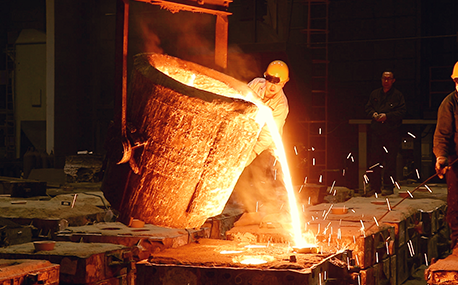
In the forging workshop, industrial furnaces smelt metals, including cupola, induction furnace, resistance furnace, electric arc furnace, vacuum furnace, open hearth furnace, crucible furnace, etc; There are sand mold drying furnace for baking sand mold, ferroalloy drying furnace and casting annealing furnace, etc; In the forging workshop, there are various heating furnaces for heating ingots or billets before forging and heat treatment furnaces for relieving stress after forging;
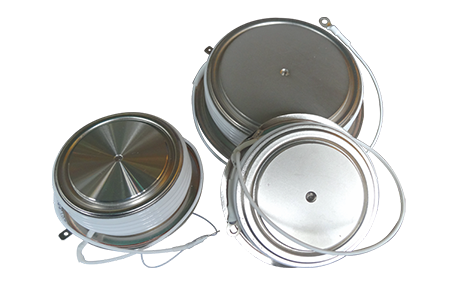
The most effective way for the failure of the medium frequency furnace is to use the low current experiment to judge whether it is the fault of the rectifier circuit or the fault of the inverter part. In the low current experiment, when the DC voltage is less than 513v, it indicates that there is a phase loss fault in the DC rectifier part. Check the specific thyristor fault, and the pulse breaking method should be used to judge whether it is the thyristor fault or there is no trigger pulse.
The most effective method for the failure of the intermediate frequency furnace is to use a small current experiment to judge whether the rectifier circuit is faulty or part of the inverter fault. When the DC current is less than 513 volts

Please send us your request and we will reply to you within 24 hours.
We will get in touch with you as soon as possible
